
Our Story

Our Story
STAE did not begin because I was trying to build an organization. It began because I couldn’t ignore what I kept seeing.
Before there was a building, before there was staff, before there were awards, national partnerships, or the Innovation Factory, there were young people standing in front of me carrying something undeniable. It was in their eyes, in their movement, in the way they showed up—this light, this energy, this brilliance. And right beside it was the absence. They had nowhere safe enough, strong enough, or culturally honest enough to hold it. The reason I recognized it immediately, was because I had lived it.
I knew what it meant to have rhythm in your body and no formal place to put it. To have dreams that stretched far beyond your circumstances, but no access to the kinds of programs that could help you develop them. I didn’t grow up in studios. I grew up in living rooms and backyards, learning from whatever I could find—Soul Train, Fame, MTV, watching people like Paula Abdul and Michael Jackson and thinking, I can do that, I just need a way in. So I became the way in.
I didn’t set out to be a teacher. I just started sharing what I knew with the kids around me. And before I even had the language for it, something was already forming, something rooted in connection, in culture, in understanding.
Years later, when I moved to Sacramento and found myself working at the phone company, doing everything I was supposed to do, building what looked like a stable life, that feeling came back. Stronger this time.
I was still teaching wherever I could, schools, churches, community spaces, parks, anywhere that would let me gather young people long enough to create something. And every time, it was the same transformation. They would walk in guarded. And then the music would start and everything shifted like it always did and for a moment, none of us were what the world had called us. We were free and we enjoyed every second of that freedom until it was time to leave the room and go back to our tough realities.
And I remember thinking, Why is this the only place they get to feel like this?
That question stayed with me. It followed me home. It sat with me in silence. It interrupted my comfort. Because I knew what they were going back to when they left. Systems that didn’t see them. Classrooms that didn’t understand them. Environments that were quick to correct but slow to connect. I had seen too many bright young people shrink themselves just to survive and I couldn’t accept that as their future.
So I made a decision that didn’t make sense to anyone looking from the outside. EVERYBODY thought I was CRAZY! I walked away from stability. I cashed out my 401(k). I stepped into uncertainty without a safety net and I bought a building. Not because it was easy or smart on paper, but because it was necessary.
When you grew up as a child who needed something that didn’t exist, you don’t debate long when you see that same need in someone else. You recognize it in the way they act out, in their silence, or in the way they perform confidence before they actually have it.
I could not just stand by and watch that. So Studio T Urban Dance Academy was born, not as a business, but as a response. From the outside, it may have looked like a dance studio. But inside, it was something much deeper. It was a place where young people could walk in carrying everything the world had placed on them and, for a moment, set it down. I watched it happen over and over again. A child who wouldn’t make eye contact slowly stepping forward. A teenager who barely spoke finding their voice through movement. A young person labeled “difficult” becoming the one others followed. And in those moments, I understood something clearly, this was never about dance. Dance was just the doorway. What we were really building was identity. We were showing young people who they were before the world told them who they weren’t and once that realization settled in me, there was no going back because the need didn’t stop at dance. They absolutely needed more.
They needed to understand money, and business. They needed exposure to careers they had never seen, places they never heard of, and they needed someone to show them that what they loved could become something that sustained them. They needed a system and just as that vision began to take shape everything for me fell apart. 2008 came, and the bottom fell out of my life and I lost everything.
With the recession, the studio was gone. My marriage ended. My daughter nearly drowned, and everything in me shifted as I fought to hold my family together while she fought to recover. I found myself in debt, back on government assistance, standing in the middle of everything I had built, watching it collapse.
That kind of moment will tell you exactly who you are. Because that’s where people disappear. That’s where they say, “I tried.” That’s where the dream quietly dies. But even in that space, the need didn’t disappear. My babies didn’t disappear and I just couldn’t look at them and choose to walk away. So I rebuilt.
Not quickly. Not easily. But with intention. I went back to school. American River College. Then California State University, Sacramento. I learned everything I didn’t know - business, photography, grant writing, production, strategy. I took what had once been instinct and gave it structure.
That’s when me and STAE entered our chrysalis season. STAE stopped being a place. It became a system.
What started as a dance floor expanded into something far greater—a living ecosystem shaped by one consistent question:
What do our youth need now?
And the answer kept growing.
They needed cameras, so we built media programs. They needed income, so we built entrepreneurship pathways. They needed stages, so we created platforms. They needed belonging, so we created community and over time, something beautiful rose from the rubble. I watched young people step into spaces I once only dreamed of. I watched them perform, travel, create, lead. I watched them build careers, businesses, and lives that looked nothing like the limitations they started with.
But what stayed with me most were the quieter victories. The student who stayed in school. The child who finally believed they were capable. The parent who exhaled because their child had somewhere safe to grow. I’ve watched young people like Hannah Feuerwerker walk in at twelve years old and grow into leadership, into ownership, into a life built with intention. I’ve watched Miss Asia rise from a young student into a teacher, a leader, a creator in her own right.
That’s the recurring story, not just my rise, theirs.
I just didn’t set out to create something impressive, but something necessary. It was born from difficulty, but not defeat. From a deep belief that our young people are not broken, they are simply unseen, underresourced, and totally underestimated. As an organization, we never miss when the moment that one of our kiddos turns their talent into something tangible—into income, into opportunity, into a future they can actually see.
That’s STAE. A beautiful thing born from what was missing. A living answer to a question I could never ignore. And a reminder that when the need is real enough, you don’t wait for someone else to build it. You built it!

Our Mission
To transform the lives of youth and families by making creativity a pathway to wellness, belonging, and economic mobility.
Through culturally relevant arts, digital learning, and entrepreneurship training, we equip young people with the skills, confidence, and opportunities to rise beyond systemic barriers and build thriving futures.
Our Vision
A world where every young person—regardless of zip code or circumstance—has access to creative education, financial empowerment, and career pathways that lead to long-term stability and generational success. We envision Innovation Factory hubs across the nation, fueling a movement where creativity becomes essential infrastructure for health, equity, and economic opportunity.
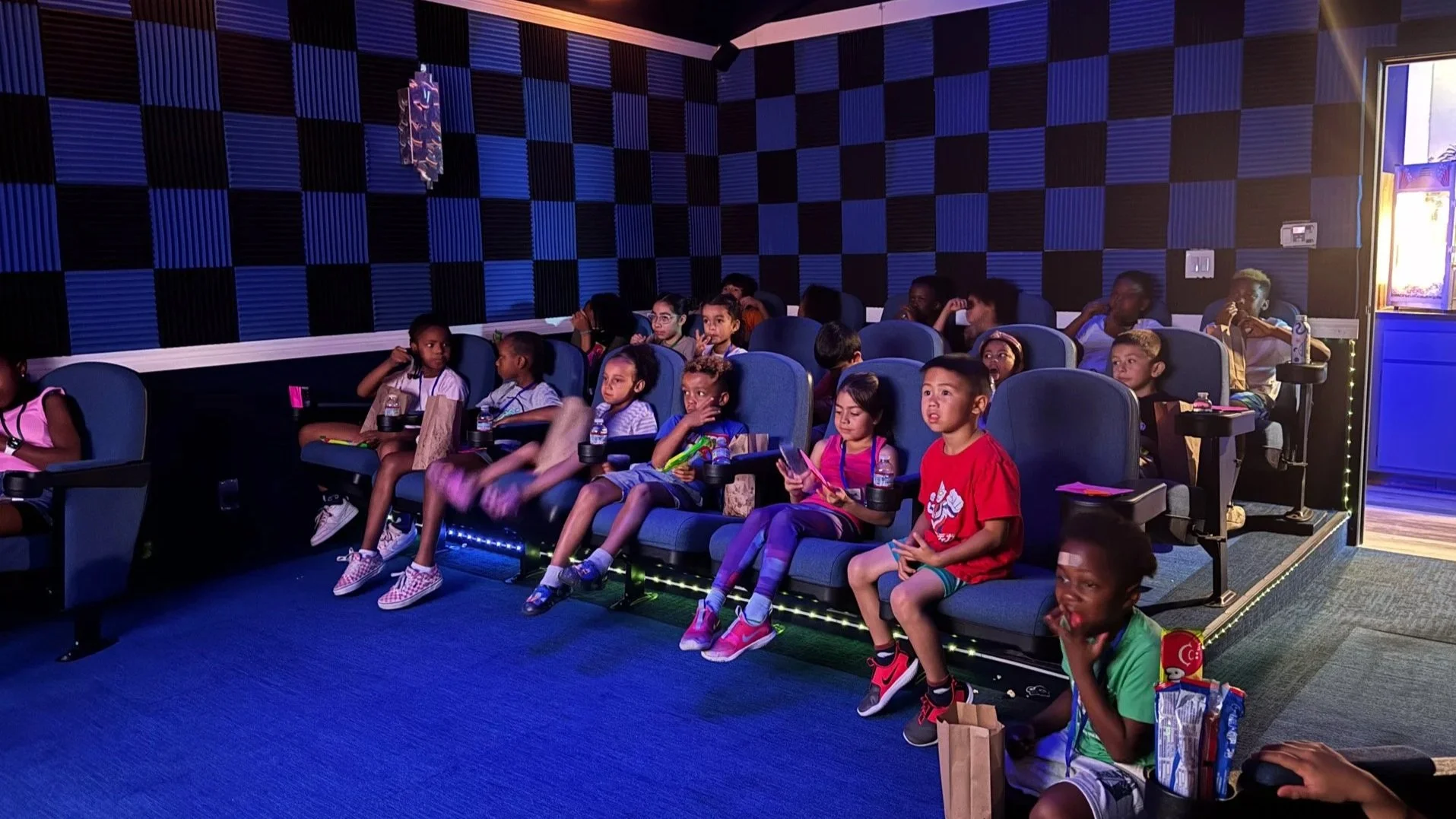
Where Creativity Meets Economic Mobility
STAE’s dual innovation is simple and powerful:
Reach the unreachable—meeting youth in schools, neighborhoods, detention facilities, and digital spaces.
Teach beyond the arts—leveraging hip hop, media, and storytelling to unlock leadership, literacy, employability, and self-belief.
Our programs now include:
Dance, music, and media arts training across 1,600+ annual classes
The Innovation Factory—a 44,000 sq. ft. creative campus with production studios, podcast rooms, classrooms, and business incubator spaces
Side Hustle Academy, where youth earn real income through photography, videography, social media management, design, and branding
PassToClass.com, our digital learning platform with 1.8M+ online engagements
LVL Up Creative Campaigns, empowering youth to produce high-impact content around mental wellness, public health, and community pride
Basic needs support, from meals and hygiene kits to financial education
Cultural and community events, including California’s Day of Dance and national dance exchanges
National Reach & Measurable Outcomes
STAE consistently delivers 2–7x higher impact than national averages in mental wellness, belonging, arts access, and youth employment readiness. Our programs produce transformative, trackable change:
84% improved mental health
88% increased sense of belonging
85% BIPOC arts access
93% retention in justice-impacted youth programs
63% of alumni out-earn their parents within 5 years
44% reduction in stress indicators statewide
85% improved school attendance
Our reach includes:
282,000 youth served nationwide
14,800 youth and families served annually in California
322 schools across 6 states
7,362 educators supported
STAE_National Impact_Fact Sheet…
The Innovation Factory: A Home for the Next Generation
Opened in partnership with Gensler, BEHR Paints, the State of California, the City of Sacramento, and SMUD, the Innovation Factory is our flagship 44,000 sq. ft. creative health hub. It includes production studios, podcast suites, photography labs, editing bays, performance spaces, and entrepreneurship workrooms—giving youth access to industry-standard tools typically out of reach for low-income communities.
This campus serves as:
A living classroom for digital media, design, tech, and performing arts
A business incubator where students earn income through real client work
A community hub for events, showcases, and cultural exchange
STAE_National Impact_Fact Sheet…
A Legacy of Transformation
STAE was born from adversity and built through resilience. Founder & CEO Miss Tee has dedicated more than 30 years to helping young people turn turmoil into triumph. Her journey—from losing her building, home, and stability during the 2008 recession to building a national organization—mirrors the resilience she instills in every student. Her leadership has earned national recognition including:
U.S. Small Business Administration’s 2025 Business Person of the Year
LA Times Inspirational Women Leadership Award
Gold Stevie Award for Female Executive of the Year
California Legislative Women’s Caucus Woman of the Year
STAE_National Impact_Fact Sheet…
A Movement Rooted in Culture & Community
We honor the pioneers who shaped the arts that shape our youth. Our work with dance icon Popin Pete—through PopinPete.com and “Dance With Legend Popin Pete”—connects new generations to the lineage of street dance culture and its global impact.STAE_National Impact_Fact Sheet…
STAE is not just an arts organization. It is:
A health intervention
A workforce development engine
A creative economy accelerator
A community safe haven
A pipeline to purpose, pride, and prosperity
What’s Next
Our future is bold. With planned expansions into Harlem, Tulsa, Atlanta, and Philadelphia, STAE aims to build a national network of Innovation Factories—creative health and economic mobility hubs designed to close equity gaps for generations to come.
